
Best Unlimited Fibre Plans NZ: 2025 Roundup
Finding the right unlimited fibre plan in New Zealand can be tricky with so many options in 2025. Here's what you need to know:
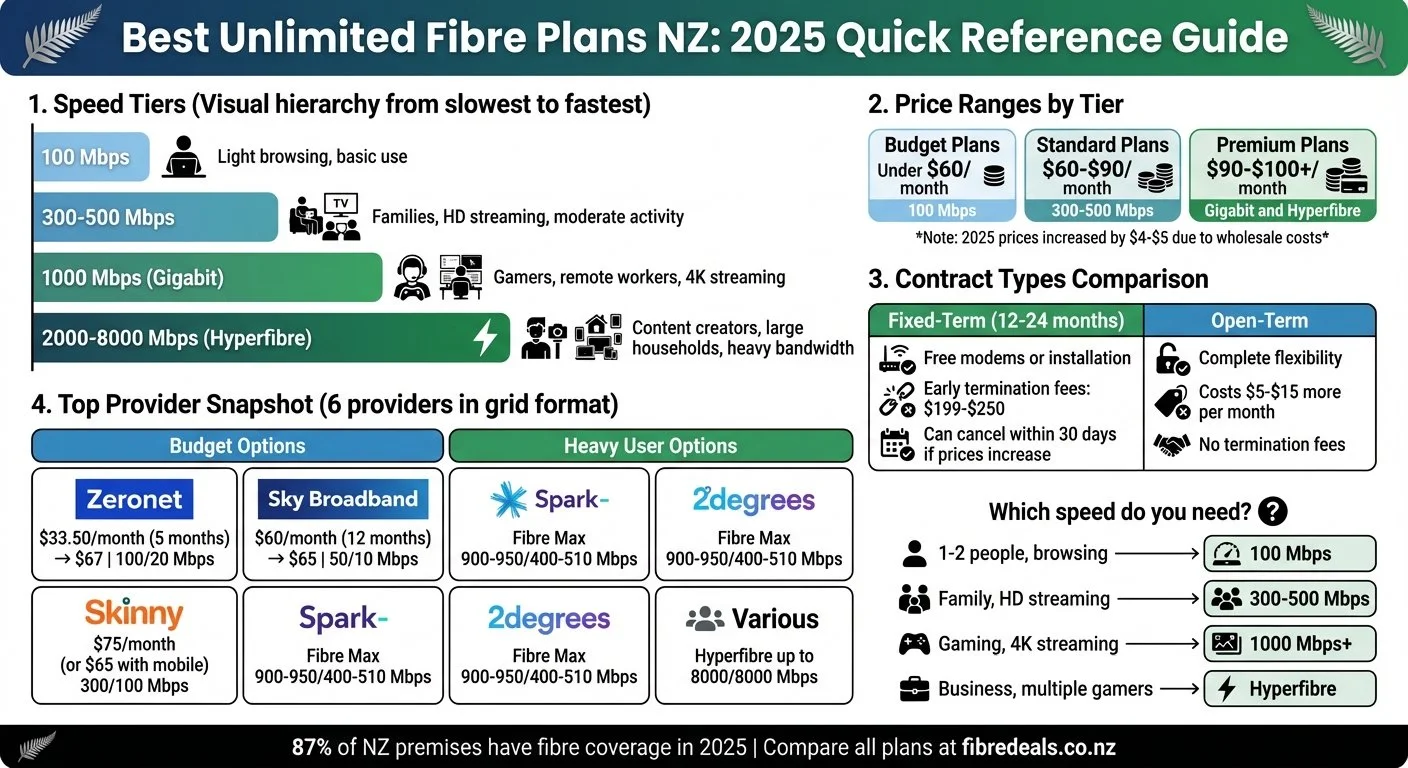
Speeds: Plans range from 100 Mbps to Hyperfibre (up to 8000 Mbps).
Pricing: Costs have increased slightly this year, with basic plans starting under $60/month and premium options exceeding $100/month.
Contracts: Choose between flexible open-term plans or fixed-term contracts (12–24 months) that may offer perks like free modems.
Usage Needs: Light users can stick to 100 Mbps, while gamers and streamers may benefit from gigabit or Hyperfibre speeds.
For quick comparisons, Skinny, Sky Broadband, and Zeronet offer affordable options for everyday use, while Spark and 2degrees cater to heavy users with gigabit plans. Use tools like fibredeals.co.nz to compare plans by price, speed, and contract type to find the best fit for your household.
NZ Unlimited Fibre Plans 2025: Speed and Price Comparison Guide
What You Need to Know About Unlimited Fibre in New Zealand
Speed Options and Fibre Coverage in 2025
Unlimited fibre plans in New Zealand offer a range of speed options, starting from 100 Mbps and going all the way up to Hyperfibre plans that can reach an impressive 8000 Mbps. The more common choices include 100 Mbps, 300 Mbps, 500 Mbps, and gigabit speeds (1000 Mbps and above), giving users plenty of flexibility based on their needs.
By 2025, fibre coverage has expanded to reach about 87% of premises across New Zealand. While urban areas enjoy near-total access, some rural locations still face limited connectivity and may need to rely on alternative broadband solutions.
Let’s dive into pricing trends and contract options to help you make an informed choice.
Pricing and Contract Types
In 2025, wholesale price increases have led to a rise in monthly costs, typically by $4–$5. From 1 August 2025, major providers adjusted their pricing accordingly. For instance, Spark raised the cost of its standard unlimited fibre plans by $5 per month, while Skinny increased the price of its Unlimited Fibre 300 plan by $5, bringing it to $90 per month [6][7]. However, it’s still possible to find basic fibre plans for under $60 per month [6][7].
When choosing a plan, you’ll encounter two main contract types:
Fixed-term contracts (12–24 months): These often come with perks like free modems or installation but include early termination fees ranging from $199 to $250.
Open-term contracts: These offer greater flexibility but typically cost $5–$15 more per month.
One key benefit to note: if your provider raises prices during a fixed-term contract, you can cancel it within 30 days without incurring termination fees [5][6][7].
Now, let’s look at how to pick a plan that suits your internet habits.
Matching Plans to Your Usage Needs
The speed you choose should align with how you use the internet:
100 Mbps: Ideal for light browsing or basic internet use.
300–500 Mbps: Great for families streaming HD content or handling moderate online activity.
Gigabit speeds (1000 Mbps or more): Perfect for gamers, remote workers, or households streaming 4K content.
For those with more demanding needs, Hyperfibre plans (2000 Mbps and above) are designed for professional content creators, tech enthusiasts, or large households with heavy bandwidth use. Keep in mind, these plans come at a higher price, so it’s worth ensuring the added speed matches your actual usage [1].
Choosing the right plan can help you avoid overpaying while still meeting your internet needs.
Best Unlimited Fibre Plans for Standard Home Use
Leading Providers and Their 2025 Plans
If you're looking for fibre plans tailored for standard home use, these options offer a mix of speed, affordability, and extras to suit everyday needs. Plans in the 100–500 Mbps range are perfect for streaming, video calls, and general browsing.
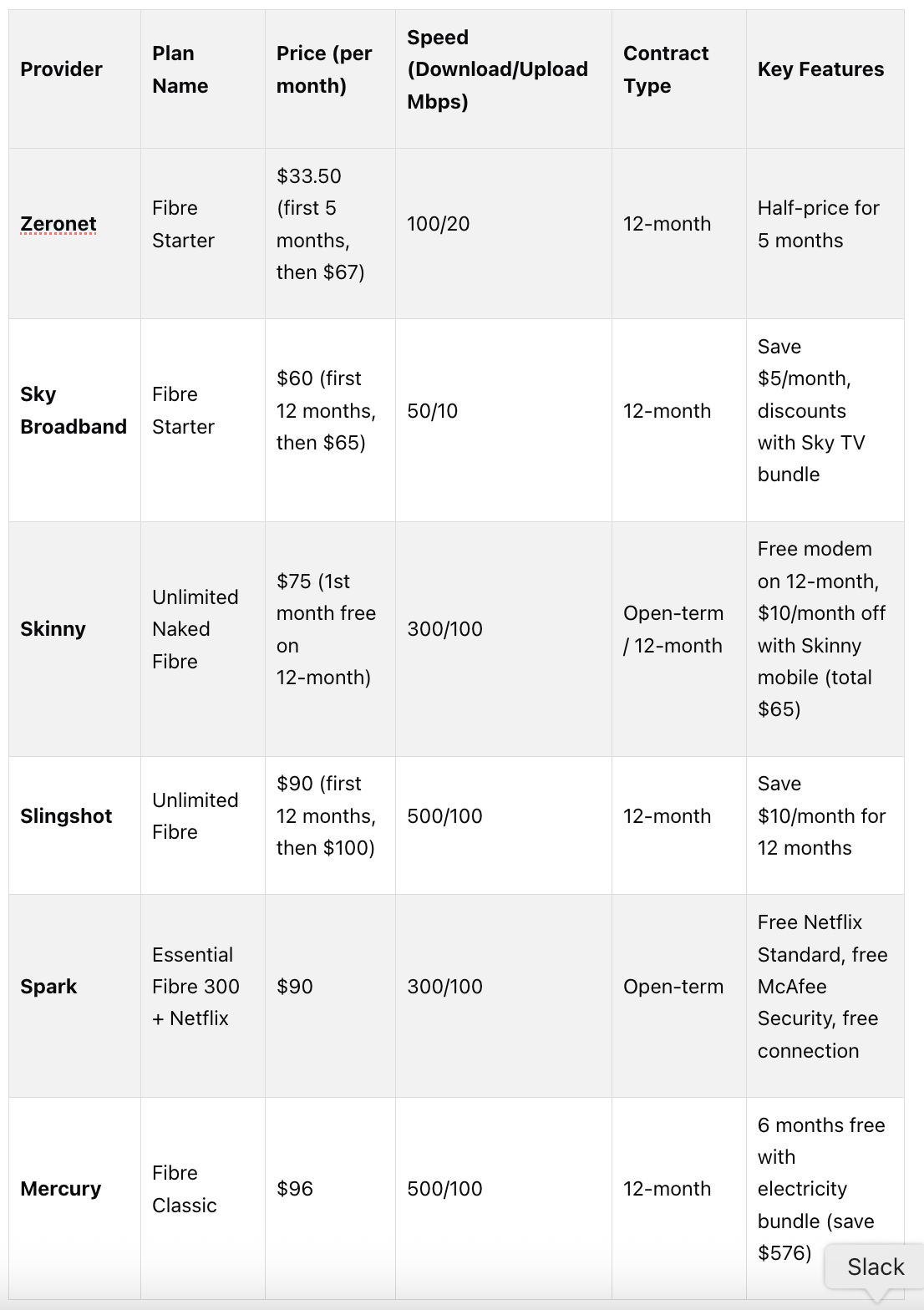
Skinny has an Unlimited Naked Fibre plan priced at $75 per month for speeds of 300/100 Mbps. If you're a Skinny mobile customer, you can save $10 per month, bringing the cost down to $65 on a 12-month contract. Plus, there's a free modem included. For those who prefer flexibility, an open-term option is available [3][4].
Sky Broadband provides its Fibre Starter plan with 50/10 Mbps speeds at $60 per month for the first 12 months, increasing to $65 thereafter. This plan is great for smaller households, especially when bundled with Sky TV. Sky Broadband also earned top marks for customer satisfaction at the Canstar Blue 2023 Awards [2][4].
Slingshot's Unlimited Fibre plan offers 500/100 Mbps speeds for $90 per month during the first year, then rises to $100. It's a solid choice for households with higher streaming and data needs [4]. Similarly, Mercury Fibre Classic delivers 500/100 Mbps at $96 per month and comes with a significant perk: six months free when bundled with electricity, saving you $576 over the year [4].
For budget-conscious users, Zeronet has its Fibre Starter plan at just $33.50 per month for the first five months before reverting to $67. It provides 100/20 Mbps speeds on a 12-month contract, making it an economical option [4].
These plans strike a balance between price, speed, and added benefits, making them ideal for everyday home use. The table below provides a quick comparison of these plans.
Comparison Table: Standard Unlimited Fibre Plans
Best Unlimited Fibre Plans for Heavy Users and Gaming
Gigabit Plans and What They Offer
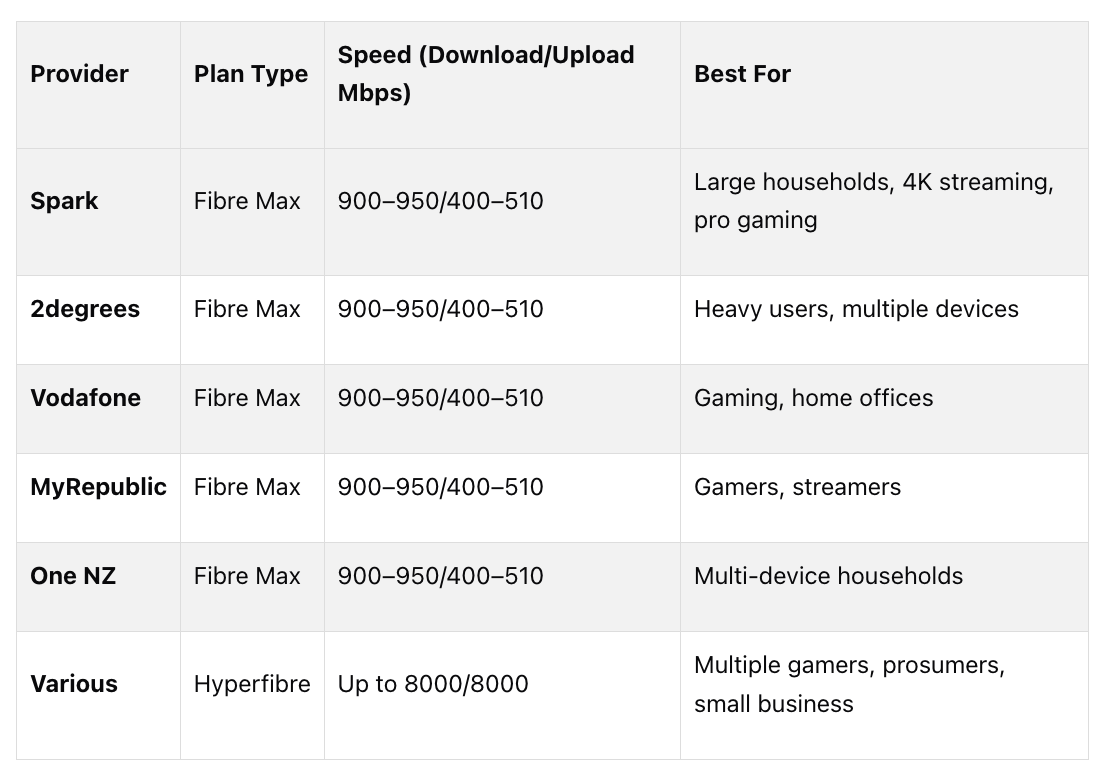
For households juggling gaming, 4K streaming, and multiple devices, gigabit and hyperfibre plans are the go-to options. These high-speed plans cater to heavy internet use, offering download speeds from 900–950 Mbps with Fibre Max plans and reaching up to 8000 Mbps with Hyperfibre. They combine everyday functionality with cutting-edge performance, making them ideal for demanding users.
Fibre Max plans deliver download speeds of 900–950 Mbps and upload speeds of 400–510 Mbps. They are perfect for activities like 4K streaming and professional-level gaming. Providers such as Spark, 2degrees, Vodafone, MyRepublic, and One NZ offer Fibre Max plans.
Hyperfibre plans take things up a notch, providing symmetrical speeds of up to 8000 Mbps. These plans are designed for households with multiple gamers using wired devices like PlayStation or Xbox, or for anyone streaming 4K video games and movies where buffering simply isn’t an option. While Hyperfibre is more expensive, it's a great choice for prosumers or small businesses needing ultra-reliable, low-latency internet [8].
To get the best gaming experience, connect your device via ethernet rather than relying on Wi-Fi. If wireless is your only option, invest in a Wi-Fi 6/6e router to keep latency as low as possible.
Comparison Table: High-Speed Unlimited Fibre Plans
Find the Best Fibre Internet Deals
Explore secure and reliable fibre internet plans tailored to your needs.
How to Choose Your Plan Using fibredeals.co.nz
Comparing Plans on fibredeals.co.nz
Start by entering your address on fibredeals.co.nz to check which fibre options are available in your area. Once you've got the list of all unlimited plans, use the filters to refine your search by price, speed, and contract type to find what fits your needs.
For speed, consider these guidelines: 100 Mbps works for standard use, 500 Mbps suits busier households, and 900+ Mbps is ideal for gamers or 4K streaming enthusiasts. Use the budget filter to set a monthly price range that works for you. Then, decide whether you prefer the flexibility of no-contract plans or the cost savings that often come with fixed-term agreements.
When you've narrowed down your options, compare the plans side by side. Pay attention to the monthly cost, any extras included, and setup fees. This comparison layout helps you quickly identify the plan that offers the best value for your specific requirements. By using fibredeals.co.nz, you can streamline the process and make a more informed decision.
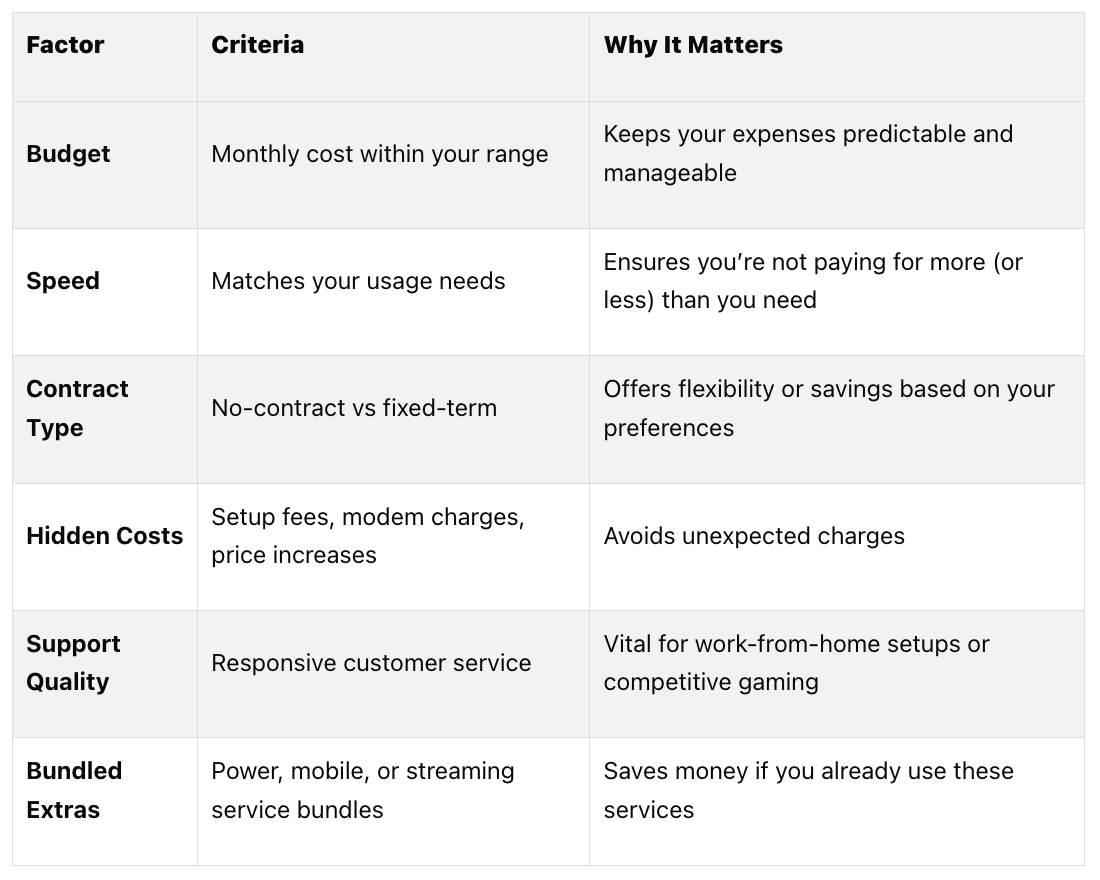
Key Factors to Consider When Choosing a Plan
After filtering your options, focus on these important aspects to finalise your choice.
While speed and price are key, don't overlook the contract terms. Check for any hidden fees or restrictions on discounts that might catch you off guard [4].
Another crucial factor is the quality of customer support. If your internet connection is essential for work or gaming, choosing a provider with reliable and responsive support can save you a lot of frustration. Also, take note of bundled extras - plans that include power, mobile, or streaming services can help you cut costs if you're already paying for those separately.
Conclusion
Choose a plan that balances speed, price, and features to suit your household's specific needs. There's no point in paying extra for speeds you won't use, and no one enjoys dealing with buffering or lag from a plan that’s too slow.
Once you've figured out what you need, head over to fibredeals.co.nz to compare plans effortlessly. Simply enter your address, set filters for what matters most - whether it’s budget, speed, or contract flexibility - and see plans side by side. This streamlined process saves you time and eliminates the hassle of jumping between provider websites, making it easier to find the best deal for your home.
FAQs
What should I think about when deciding between open-term and fixed-term fibre plans?
When deciding between open-term and fixed-term fibre plans, you’ll need to balance freedom with cost stability. Fixed-term contracts often provide lower monthly rates for a set duration, such as 12 or 24 months, which can make budgeting easier. The catch? If you need to cancel early, you might face termination fees.
On the other hand, open-term plans let you cancel or switch providers whenever you like, without any penalties. This can be a great option if you’re renting, planning to move soon, or simply prefer flexibility. The trade-off is that these plans usually come with slightly higher monthly costs. Consider your living situation, how long you’ll stay put, and whether saving money or having flexibility matters more to you.
What fibre speed is best for my household's internet needs?
Choosing the right fibre speed comes down to the size of your household and how you use the internet. If your online activities mostly include browsing or checking emails, a speed of 50-100 Mbps should handle things just fine.
However, if you're into streaming, gaming, or have multiple users online at the same time, you might want to look at plans offering at least 300 Mbps.
For larger households or those with heavy internet demands - like 4K streaming, downloading big files, or running several devices at once - speeds of 500 Mbps or more will give you the best experience. Take a moment to assess how you use the internet now and think ahead to make sure your connection stays smooth and dependable.
Are there extra costs to watch out for with fibre plans in New Zealand?
Some fibre plans in New Zealand might include extra costs like connection fees, modem charges, or setup fees. It’s important to review the details of your plan thoroughly, as you could also face fees for things like cancelling your contract early or not returning equipment when you end your service.
To steer clear of unexpected expenses, take the time to understand all potential charges before committing to a plan.